CLIENT PRESENTATIONLLM API GatewayLLM CLASSIFICATIONNUMPYOLLAMAPYTHON
Accountancy
A calmer way to review financial data, surface anomalies and reconcile accounts.

I'm a Data Scientist and AI Engineer at Powerserve Global in London, originally from Mongolia.
BScHons in AI, Buckinghamshire New University.
Outside work, I'm also a sushi chef, I train Muay Thai, go JIM (gym haha), and play basketball. I love autumn, nature, painting, and my skull-cap hats.
I enjoy learning and trying new stuff also hitting, throwing, lifting things around haha.
Data and problem given.
I turn them into:
Here are few projects I completed during my free time, at work, or while attending university.
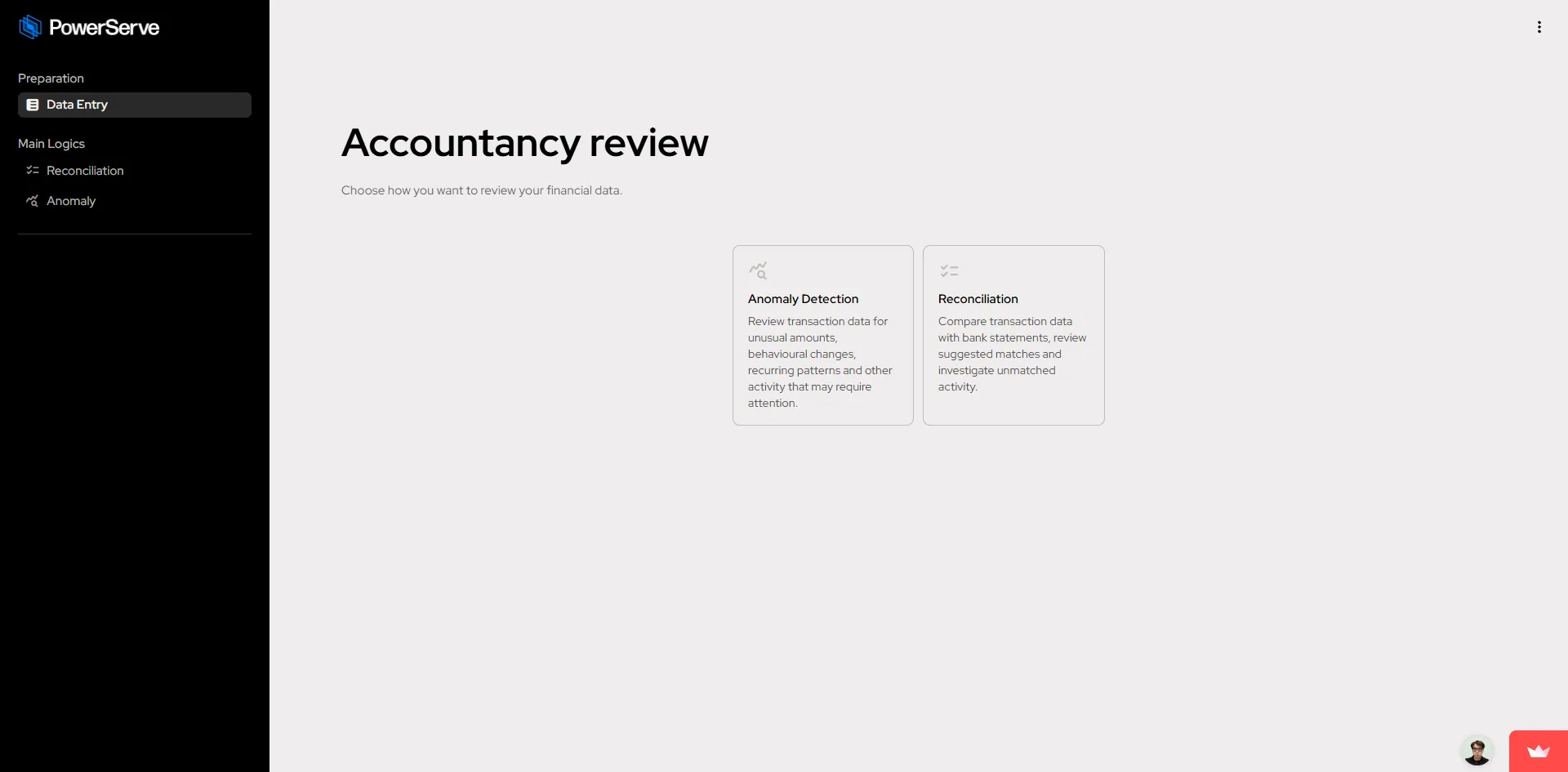
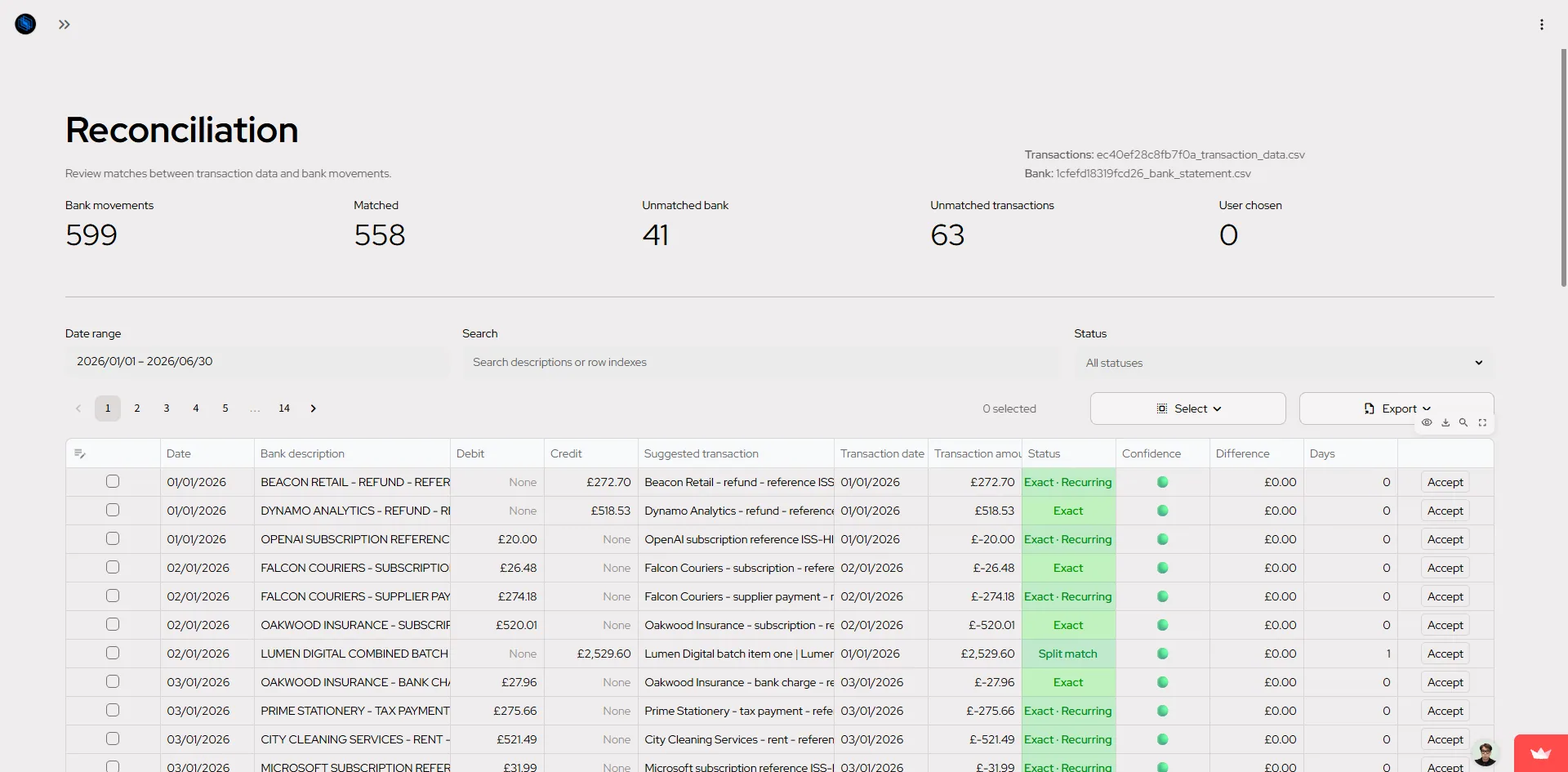
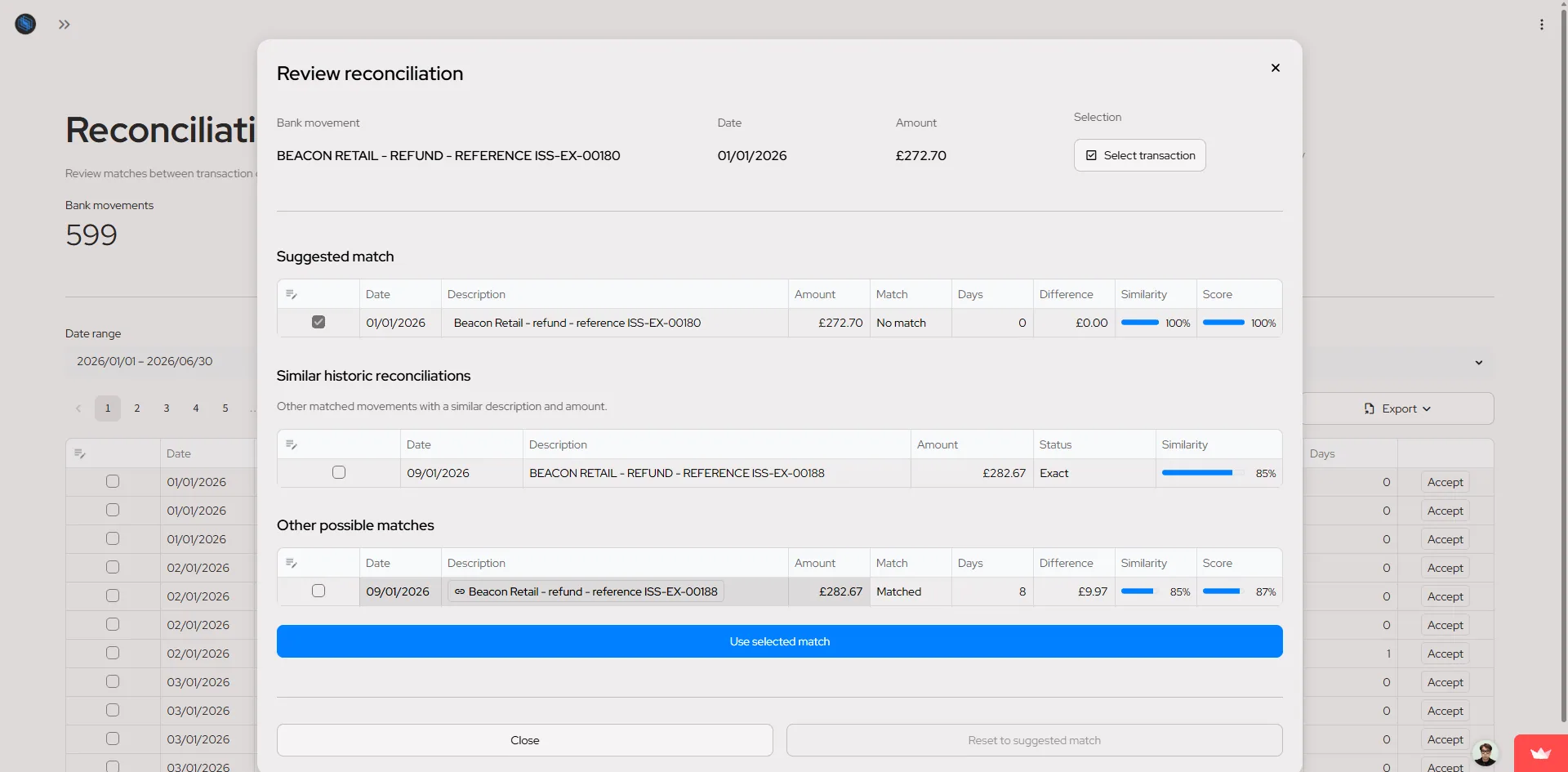
A calmer way to review financial data, surface anomalies and reconcile accounts.
A recommendation system that turns purchase behaviour into more useful product discovery.
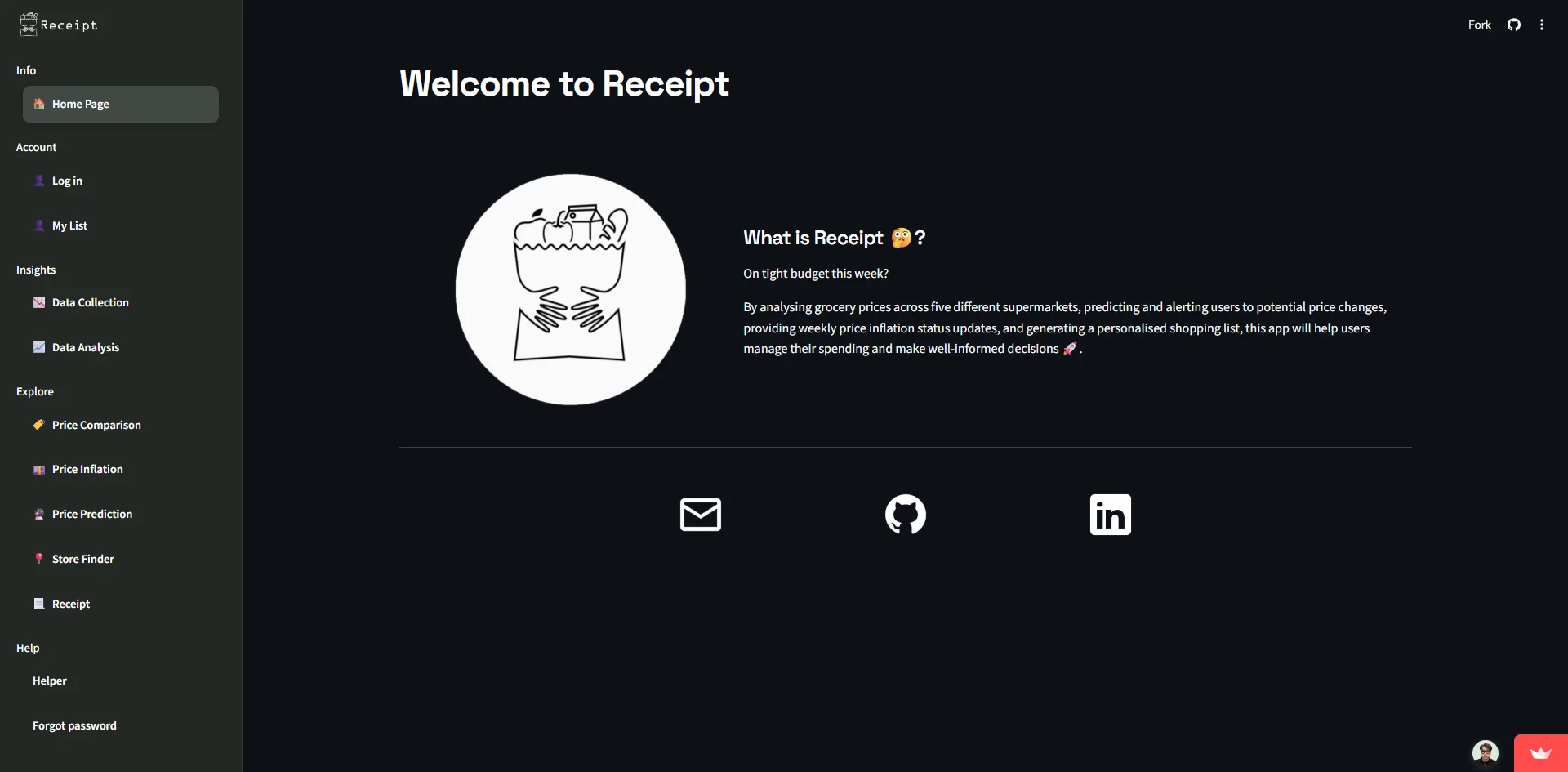
A grocery intelligence tool for seeing price changes, planning purchases and spending with intent.
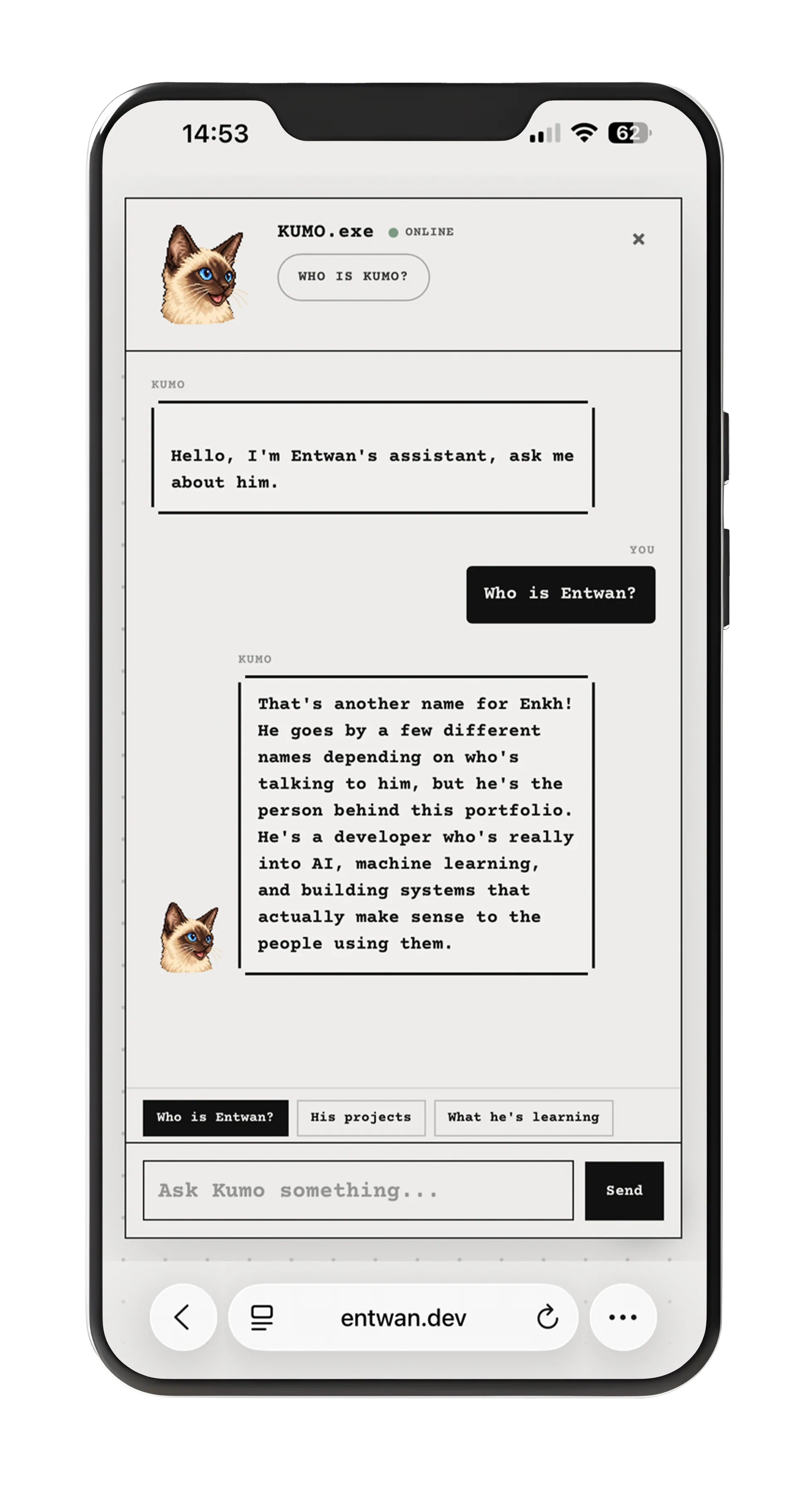
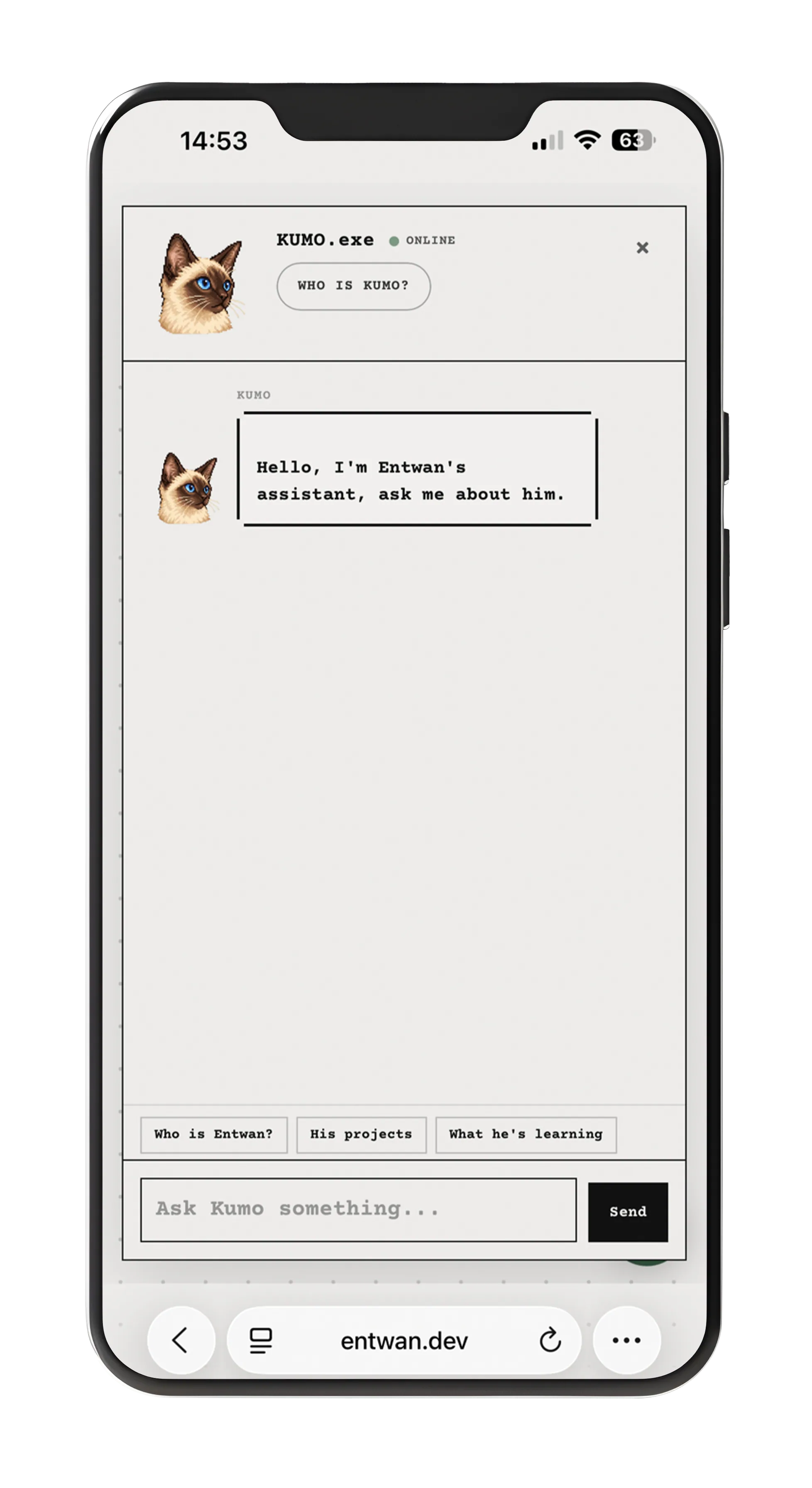
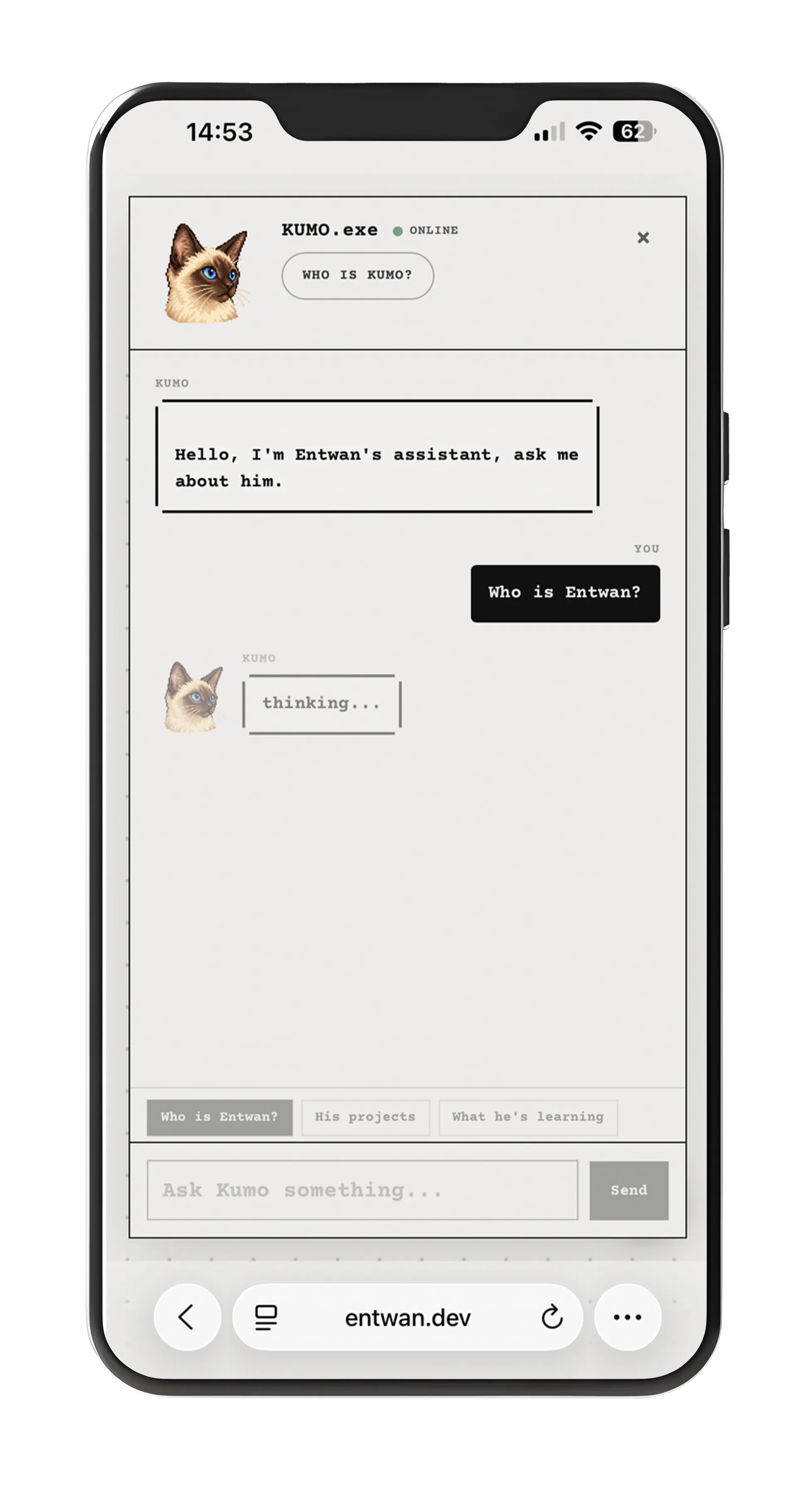
A small, grounded portfolio assistant with a slightly suspicious amount of personality.
SELECTED WORK
ABOUT ME
 yet?
yet?
REST AREA
You can ask about me from KUMO, Play some tunes ♪ too!
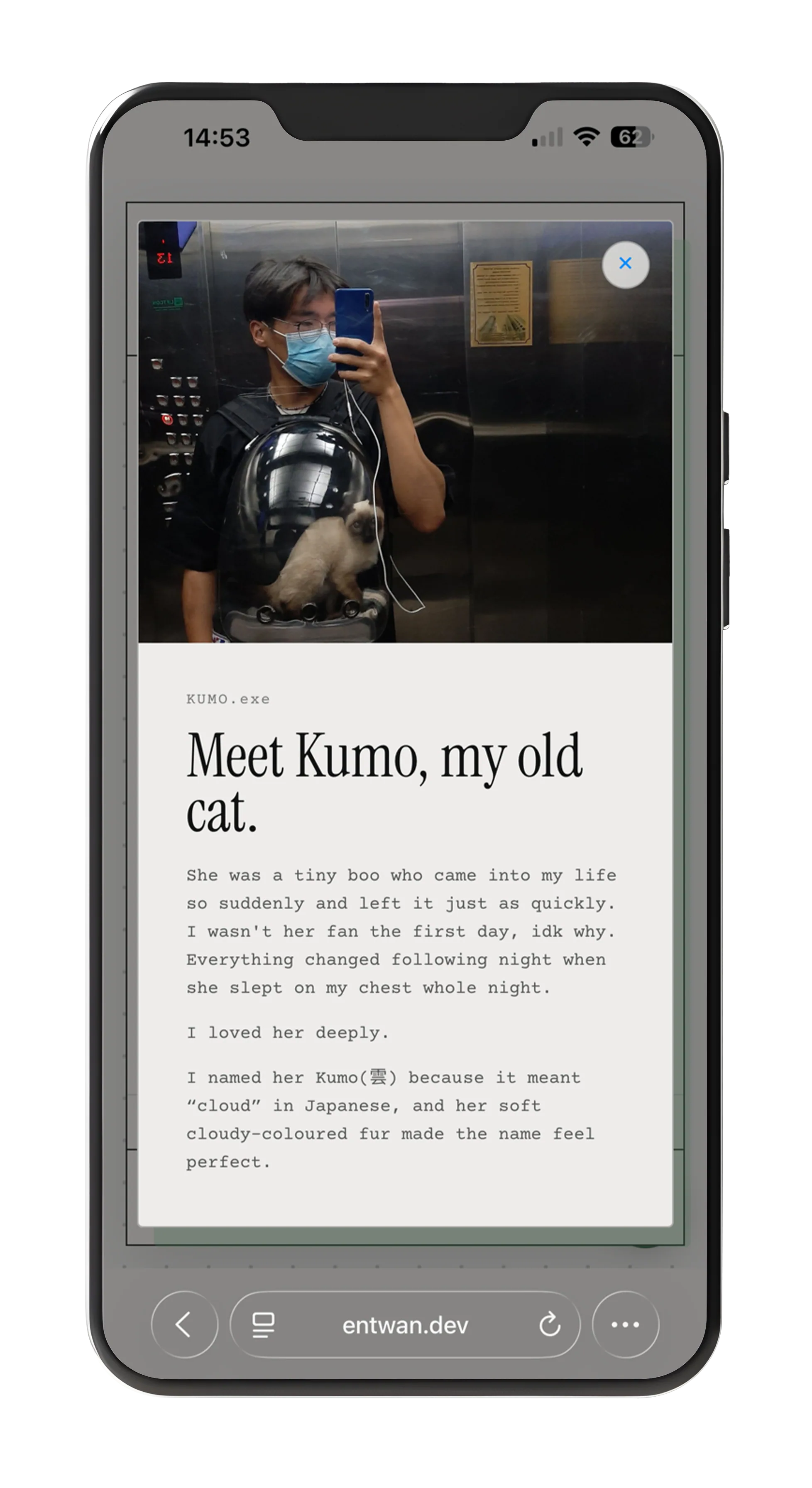
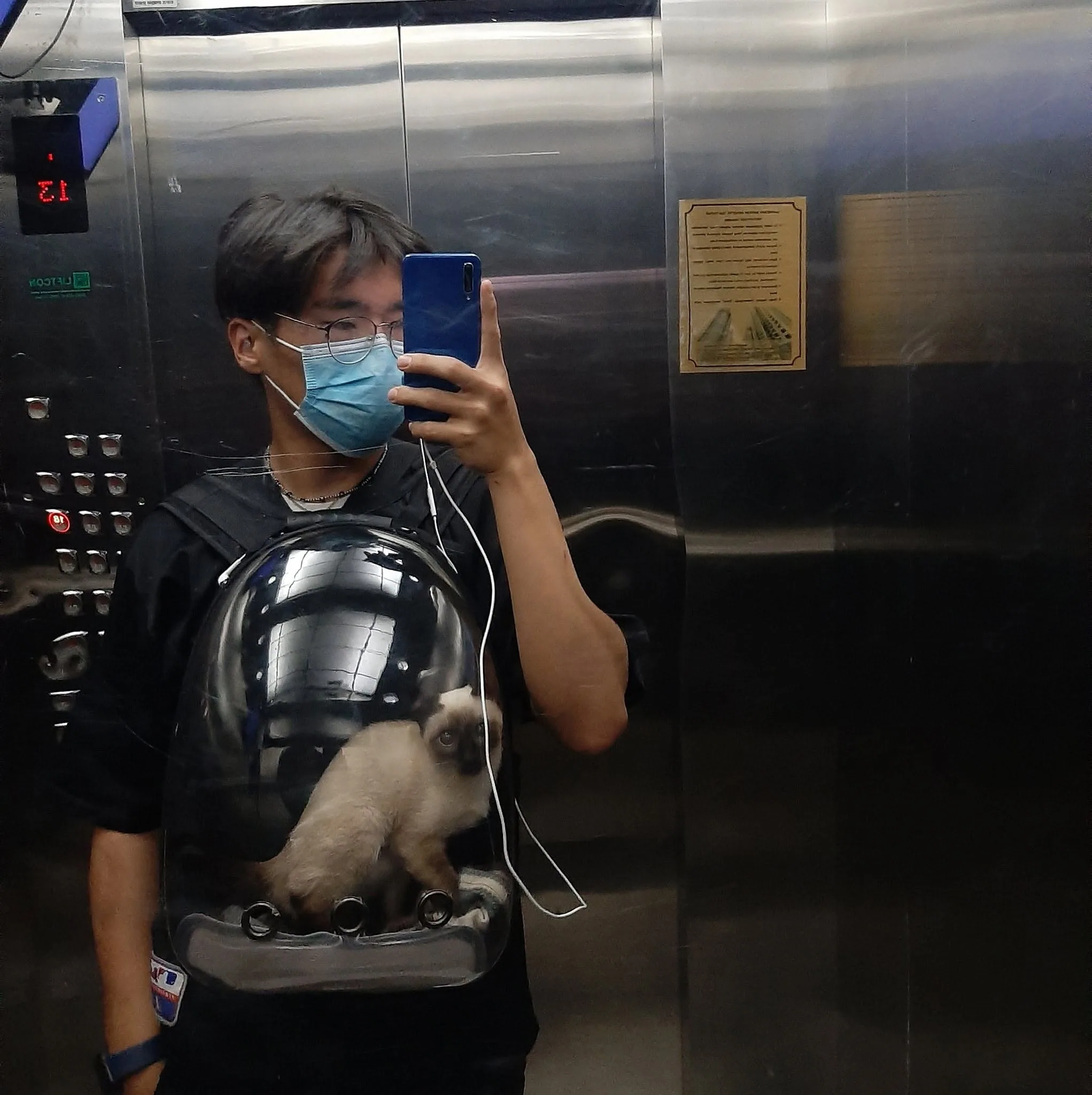
KUMO.exe
She was a tiny boo who came into my life so suddenly and left it just as quickly. I wasn't her fan the first day, idk why. Everything changed following night when she slept on my chest whole night.
I loved her deeply.
I named her Kumo(雲) because it meant “cloud” in Japanese, and her soft cloudy-coloured fur made the name feel perfect.
Turning supermarket data into smarter, budget-aware shopping.
An end-to-end platform built around hundreds of thousands of historical product records collected across five major UK supermarkets.
Grocery prices are constantly changing, but the tools students use to compare prices, manage a budget and plan their shopping are usually disconnected. Receipt brings those decisions together using regularly collected supermarket data.
I designed and deployed an end-to-end application that collects and standardises supermarket data, compares products, tracks price movement and builds personalised shopping lists around a user's budget. The database has grown into a large historical catalogue collected across five UK supermarkets.
No suitable API provided consistent pricing across all five retailers, so I built a separate collection workflow for each website. The Selenium scrapers handle different page structures, JavaScript-rendered products, pagination and missing values before cleaning and standardising the results. Over time, this pipeline has built a substantial historical supermarket dataset.
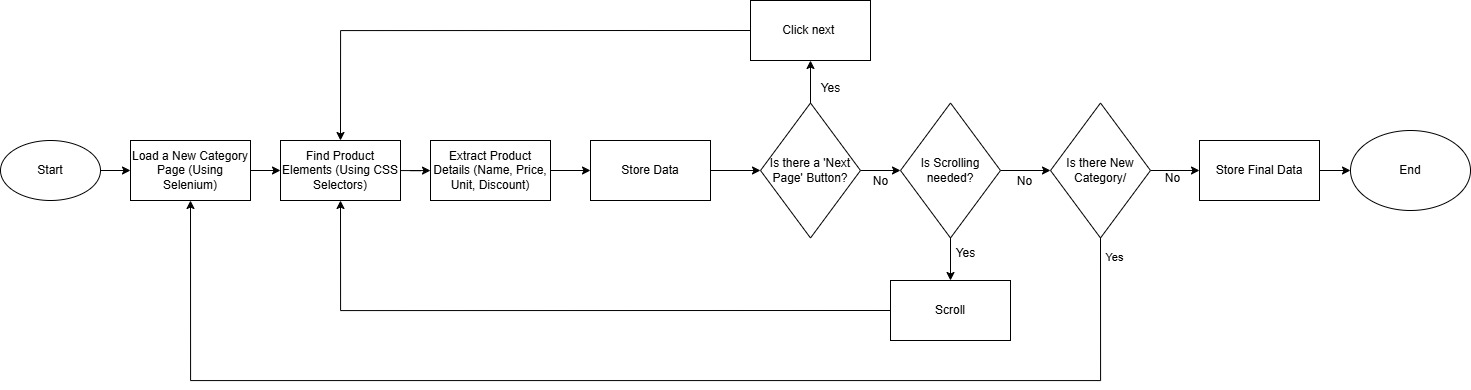
Users can type, speak or describe a meal to create a shopping list. Receipt extracts the requested items, matches them against the latest supermarket catalogue and prioritises products that fit the selected budget.
Cleaned product, discount and unit-price data from five major UK supermarkets allow users to compare similar products and explore how prices change over time.
Historical inflation data is transformed into time-series datasets and modelled with ARIMA to provide an exploratory view of potential short-term category-level price movement.
Users can enter a postcode or share their location to find nearby supermarkets. Geodesic distance calculations rank the results before they are displayed on an interactive Folium map.
Sentence Transformer embeddings and cosine similarity connect informal shopping requests to real product names. Cached embeddings and batched comparisons support matching across large product catalogues.
An LLM accessed through the Groq API allows users to describe a meal or request grocery suggestions naturally before converting the response into a structured shopping list.
Built as my final year Artificial Intelligence project.
Designed, engineered and deployed from data collection to user experience.
Case study available upon request.
Finding the transactions worth a closer look.
As part of my work, I had the opportunity to work on a financial data review and reconciliation system in response to a client's request: help their team make sense of customer files and find the transactions that need attention.
The client said their customers often send all their files at once, leaving the team with a mix of transaction exports, bank statements and other records. It can be hard to know which files to look at first, what to look for, or whether there are any outliers in the data. They wanted help organising those files and identifying the items worth a closer look.
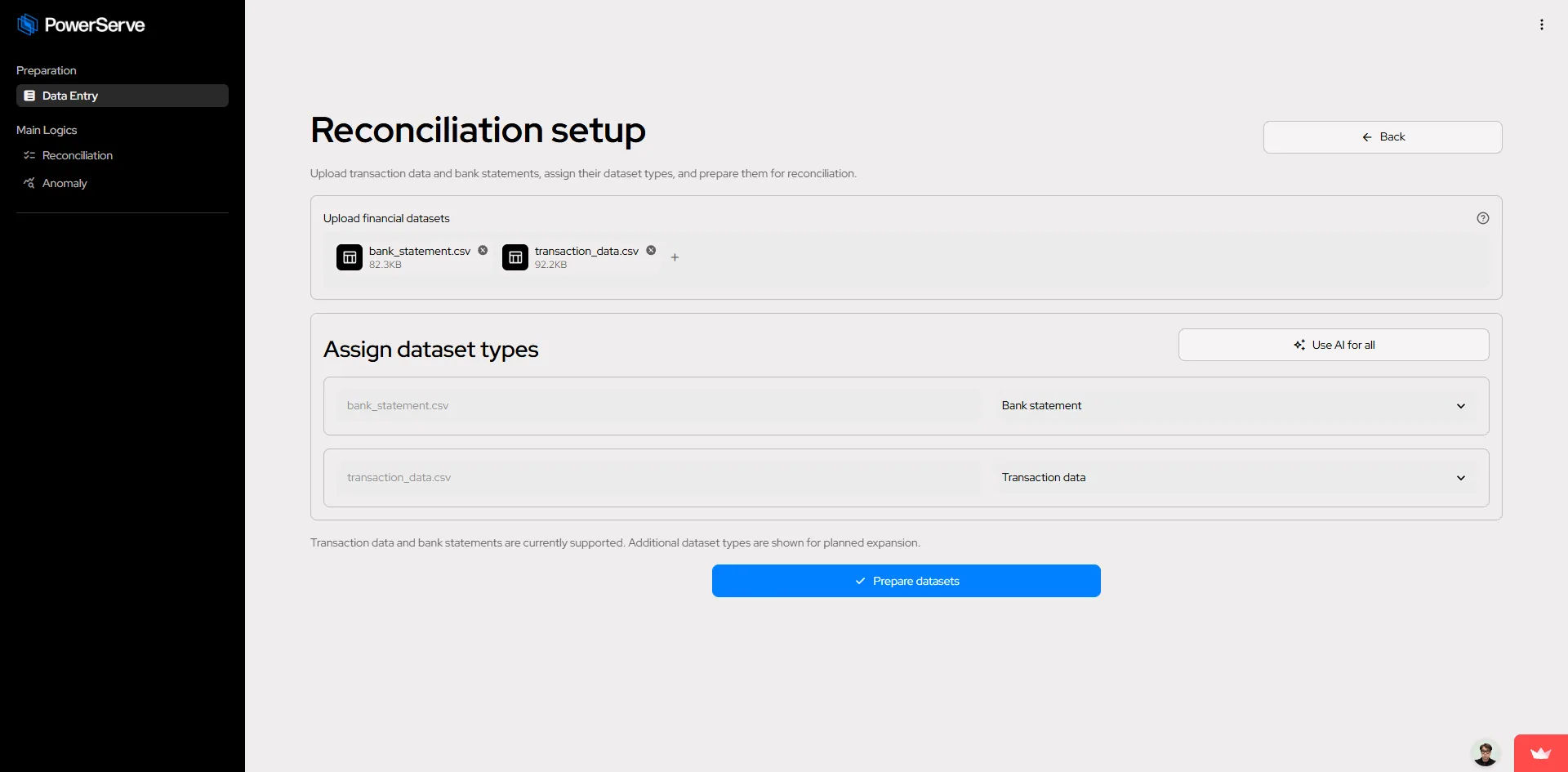
My work focused on a reusable financial data pipeline that prepares files, identifies important columns, converts them into canonical schemas, runs deterministic review checks and presents the resulting signals in a Streamlit workspace. The system helps an accountant decide what deserves attention without pretending that a signal is proof of an error.
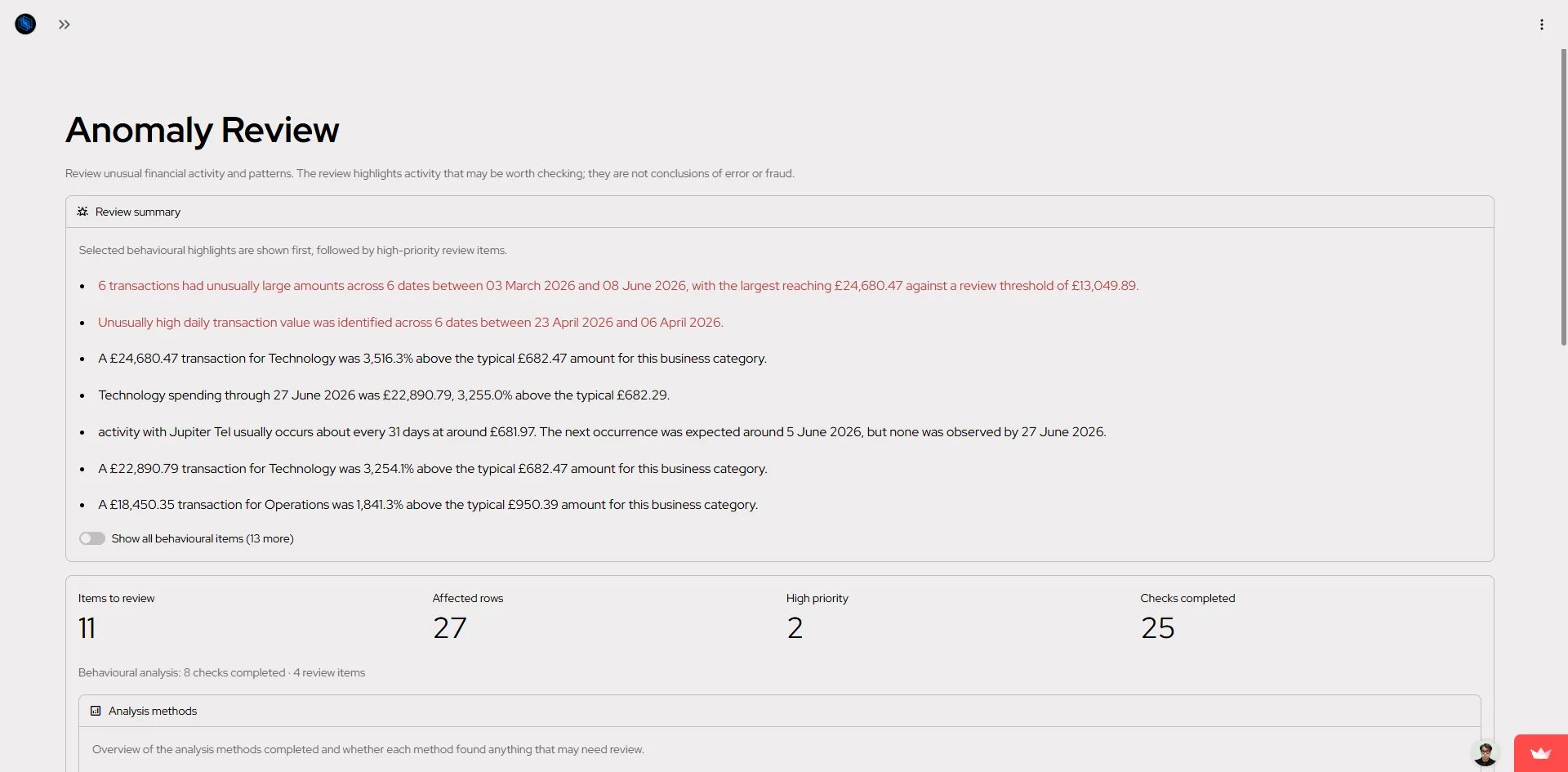
Every review item is designed to answer three questions: what was unusual, why was it highlighted, and which rows should be checked? Findings use plain-English explanations and supporting evidence so the accountant stays in control of the final judgement.
Highlights unusually large transactions, unusual daily activity, round numbers, repeated amounts, weak descriptions and other patterns that may deserve investigation.
Compares activity within meaningful groups such as business categories or counterparties, so a payment is judged against the population where it actually belongs.
Learns repeated monthly or quarterly activity and surfaces missing payments, sharp amount changes and possible duplicate recurring transactions.
Compares transaction data with bank movements using exact, tolerant and split matching, while preserving ambiguous and unmatched cases for human review.
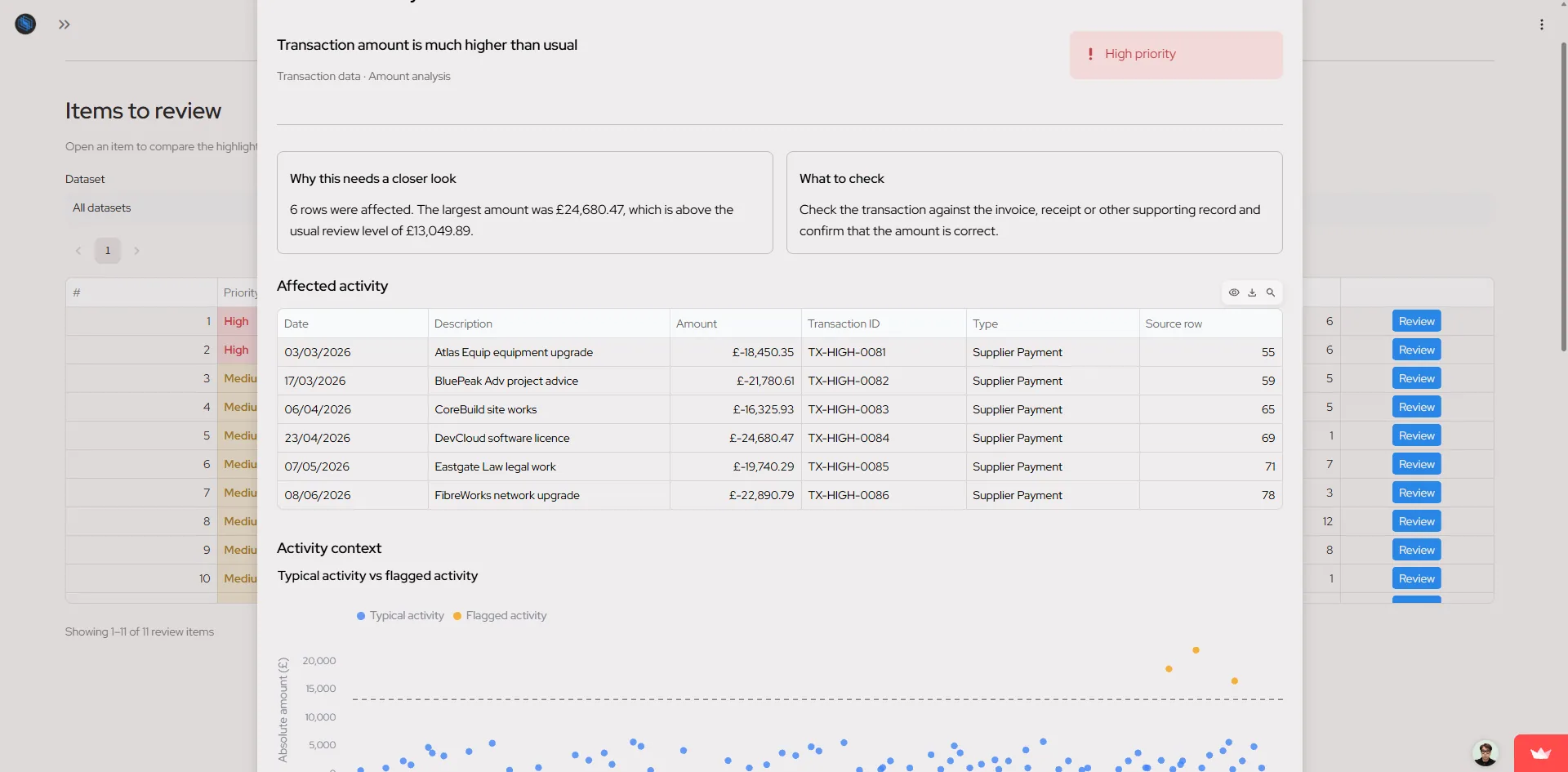
The Items to review table gives every signal a priority, analysis type, plain-English explanation and affected-row count before opening the underlying evidence.
Each file, review check and reconciliation service is isolated, allowing usable results to survive partial failures and making limitations visible instead of hiding them.
The interface is deliberately built around investigation rather than automatic conclusions. An accountant can open a signal, inspect its affected transactions, compare it with normal historical activity, review charts and supporting evidence, and mark it as expected when the explanation is satisfactory.
The current synthetic demo includes clear examples of an unusually large payment, missing monthly and quarterly payments, a recurring supplier payment that increases sharply, and a possible duplicate payment.
Built as a foundation for a wider accounting SaaS platform and built Streamlit front end for a client presentation.
Designed around reusable data contracts, explainable checks and an accountant-led review workflow.
A suspiciously well-informed little AI living inside my portfolio.
Kumo is a retrieval-augmented portfolio assistant built to answer questions about me, my work, projects, education, skills and interests without pretending to know things that are not actually in the knowledge base.
I wanted the portfolio to do more than just show static text about me. The idea was to let visitors ask questions naturally and explore the person behind the projects, while keeping the answers grounded in information I actually provided.
Kumo became a practical way for me to learn how retrieval-augmented generation works end to end, including knowledge chunking, embeddings, vector search, retrieval quality, grounded generation and connecting an AI backend to a real frontend.
Kumo is instructed to answer from retrieved evidence rather than filling gaps with invented details.
Projects, skills and interests live in a separate knowledge base, so new topics can be added without rewriting Kumo's whole prompt.
Similarity alone is not treated as proof. If retrieved chunks do not actually answer the question, Kumo simply says it does not know.
The assistant is designed to feel familiar and slightly playful, without inventing fake memories or turning into a generic chatbot.
Kumo is still evolving as I add more projects, topics and knowledge.
The right product,
for the right customer.
A client-facing recommendation and demand intelligence system built for a plumbing merchant. The project uses historical customer and sales behaviour to personalise product discovery, suggest useful basket additions and help the business understand future product demand.
The merchant has a large catalogue of plumbing, heating, ventilation, fittings, tools and related products. The challenge was helping customers find products that are actually relevant to them, while also identifying complementary items that naturally belong together.
The client also wanted to make better use of historical sales data behind the scenes, particularly for understanding product demand and supporting stock planning.
I designed a recommendation framework that changes behaviour depending on what the system knows about the customer.
New visitors receive sensible popularity-based recommendations, returning customers receive personalised predictions from their purchase history, and basket activity triggers related-product recommendations based on historical buying behaviour.
I also developed a product-level demand forecasting pipeline and built the recommendation scenarios into an interactive Streamlit application for the client.
I did not try to force every customer through the same model. A completely new visitor does not have enough information for meaningful personalisation, while a returning customer or an active basket provides much stronger behavioural signals.
The system chooses a recommendation strategy according to what information is actually available.
With no customer history or basket information, recommendations fall back to products that consistently appear in historical purchases.
Customer purchases are converted into ordered product sequences. A GRU model learns repetition, transitions and purchasing patterns to predict likely future products.
Historical orders are analysed to find products that commonly appear together, allowing the system to suggest useful additions while the customer is actively shopping.
Uses historical product popularity when there is no customer history available, ensuring new visitors still receive useful recommendations.
A GRU-based recommender learns ordered customer purchase behaviour, repeat buying patterns and product transitions to generate personalised Top-N predictions.
Item co-occurrence analysis identifies products that historically belong together, supporting basket expansion and practical cross-selling.
Recommendation logic can also consider discounted products and business-priority items rather than relying entirely on machine learning output.
Historical sales are converted into monthly product-level time series and forecast using Prophet with price, discount, time and regional holiday features.
A custom Python pipeline processes and forecasts many products concurrently using ThreadPoolExecutor, with tqdm providing live progress throughout longer model runs.
The same sales history used to understand customer behaviour is also transformed into monthly product-level time series for demand forecasting.
The pipeline incorporates quantities, pricing, discounts, seasonality and regional holiday effects before fitting product-level Prophet models.
Forecasting experiments were designed to compare product-level model behaviour rather than claim a single universal accuracy figure across the entire catalogue.
The first idea developed into a scenario-based recommendation architecture with separate strategies for anonymous visitors, returning customers and active baskets.
I later added discounted-product recommendations, business-priority ranking and a Streamlit interface so the client could interact with the different behaviours directly.
The demand pipeline evolved from basic product forecasting into a configurable monthly processing system with external regressors, holiday features, lag experiments and per-product validation.
Performance became its own engineering problem, leading to experiments with Dask, process-based parallelism, thread-based execution, regressor pruning and live progress monitoring.
Client-facing recommendation system developed for a plumbing merchant.
Recommendation systems, customer behaviour modelling and demand forecasting built around the same real-world sales problem.

Hello, I'm Entwan's assistant, ask me about him.
SIGN THE GUESTBOOK
No notes yet. Be the first.
THE WALL